What is Jatropha Curcas?
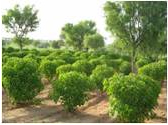 In Cambodia, Jatropha Curcas is found in all over the country and is generally grown as a live fence for protection of agricultural fields against damage by livestock as it is unpalatable to cattle. It is known in Khmer as "lahong kwong" .
Although Jatropha Curcas grows almost anywhere, suitable soil and correct management practices are essential to achieve profitable yields. When grown using appropriate farming methods, it can be a sustainable crop that sustains or improves soil health. Site selection is a critical aspect of growing Jatropha.
Regarding climate, Jatropha Curcas is well suited to the tropical climate of Cambodia. Whilst the plant can sustain long periods of drought by shedding most of its leaves, high yields of seed are obtained when the plant is grown in parts of Cambodia that have suitable levels of rainfall and sunlight.
Jatropha Curcas is a small tree or shrub with smooth gray bark, which exudes whitish colored, watery latex when cut. Normally, it grows between three and five meters in height but, when commercially grown, pruning treatments will keep it to a height of around two metres.
It can be easily propagated by seeds or cuttings, but nursery-produced seedlings generally produce the best results in most conditions.
The trees are deciduous, shedding the leaves in the dry season, depending on soil moisture content. Flowering occurs during the wet season and two flowering peaks are often seen. In permanently humid regions, flowering occurs throughout the year. The seeds mature about three months after flowering. Early growth is fast and with good rainfall conditions nursery plants may bear fruits during the first growing season, if not pruned. The flowers are pollinated by insects, most favourably by honey bees.
Fruits may be produced several times during the year if soil moisture is good and temperatures are sufficiently high. Each inflorescence yields a bunch of approximately 10 or more fruits. The seeds become mature when the capsule changes from green to yellow, after two to four months. The plants yields increase each year until it reaches its optimum yield in the 6th year.
On the subject of spacing, advice from a Jatropha expert is required when planning the spacing of either a farm or plantation. In general though, larger spacings with less trees are able to produce the most economical yields, due to increased availabillity of sunlight, moisture, and nutrients.
Jatropha seeds are crushed to extract raw oil, a process that also provides organic fertilizer from the husks. Jatropha seeds contain about 35% of non-edible oil. And the annual yield of seed after the plant reaches maturity ranges from 0.5 to 8 tonne/hectare, depending upon soil type and the farming methodologies used.
Jatropha oil is used most commonly as a feedstock for making biodiesel, as a straight vegetable oil in modified diesel engines, or as a pure plant oil to replace Heavy Fuel Oil or Light Fuel Oil in power plant applications. On a smaller, community-scale level it could also be used for making soap, candles,varnish, a lubricant, hydraulic oil etc.
Jatropha oil is an environmentally safe, cost-effective, renewable source of non-conventional energy.